

If you’ve ever gotten a moving quote over the phone and then a very different number on moving day, there’s a decent chance stairs, an elevator, or a long carry distance had something to do with it.
These details change how long a move takes and how many people it takes to do it safely. That part matters a lot, actually. Which is exactly why they need to be part of the conversation before a truck ever shows up.
A professional moving company will ask about all of this upfront, so nothing catches you off guard later.
Why Stairs Change the Math on a Move
Carrying a couch down a single flight of stairs is a different job than carrying it down four flights with a landing that barely turns. Stairs slow down loading, increase the physical strain on a crew, and sometimes require a different approach entirely for large furniture that can’t make a tight turn.
This is actually one of the bigger reasons why moving companies conduct pre-move surveys. A crew that shows up without knowing what they are walking into, floor-wise, is already behind. A move estimated for a ground-floor apartment and a move estimated for a third-floor walk-up are not really the same job, even if the boxes and furniture are identical.

What Elevator Buildings Require
Elevator buildings solve the stairs problem but introduce a different one: timing. Most buildings only allow a certain window for moves, and if the elevator is shared with other residents, a crew might lose time waiting for it to become available.
Some buildings also require a reservation in advance or a protective pad installed inside the elevator car before anyone can use it for a move. None of that is complicated, but it does need to be planned around rather than found out about on moving day itself.
How Long Carry Distances Add Time
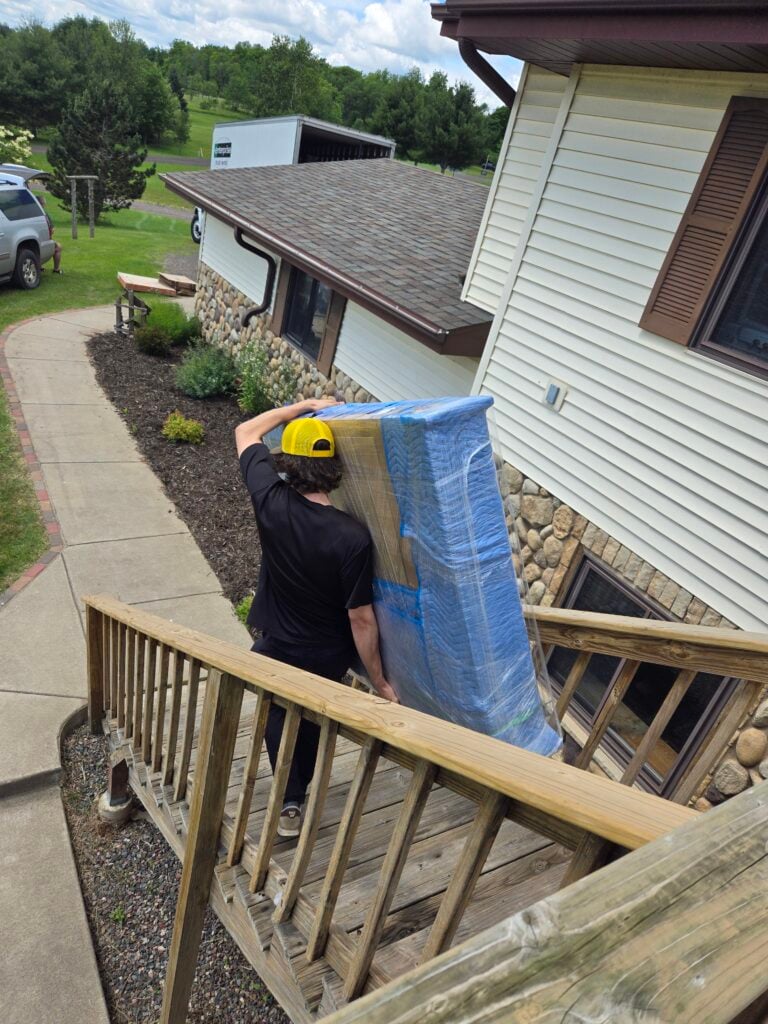
A long carry happens when the truck can’t park close to the entrance, whether that’s because of a building setback, a busy street, or a parking restriction. Every extra step between the truck and the front door adds time and effort, and on a hot day or with a large item, that adds up quickly. Long carries are common in denser areas and in buildings with restricted loading zones, and they’re one of the details that’s easy to miss until moving day is already underway.
Why We Don't Quote These Details Over the Phone
This is exactly why we don’t give quotes over the phone. A phone call can’t tell us how many stairs you have, whether your building requires an elevator reservation, or how far the truck will need to park from your door.
What affects moving costs is usually the smaller, site-specific things. Our walkthrough-based quotes, whether in person or over live video, let us actually see these details before giving you a number, so the estimate reflects the real job rather than a guess based on square footage alone.
How Trained Crews Handle These Challenges
Stairs, elevators, and long carries all take more out of a crew that isn’t used to them. Every mover on our team is a trained, W-2 Daymakers employee, which means the same crew handling a straightforward single-story move also knows how to manage a fourth-floor walk-up or a building with a strict elevator window.
That consistency matters more than people expect until they’ve had a bad experience with a crew that wasn’t prepared for it.
Planning Ahead for Buildings With Special Requirements
If you already know your building has an elevator reservation system, a strict loading dock schedule, or a long carry from the nearest parking area, mentioning that during your walkthrough means it gets built into the plan from the start. That’s a much better position to be in than finding out about a scheduling conflict or an extra charge once the crew has already arrived.
For apartment and condo moves around Bloomington, these are exactly the kinds of details we ask about upfront, precisely so nothing about moving day comes as a surprise.
