

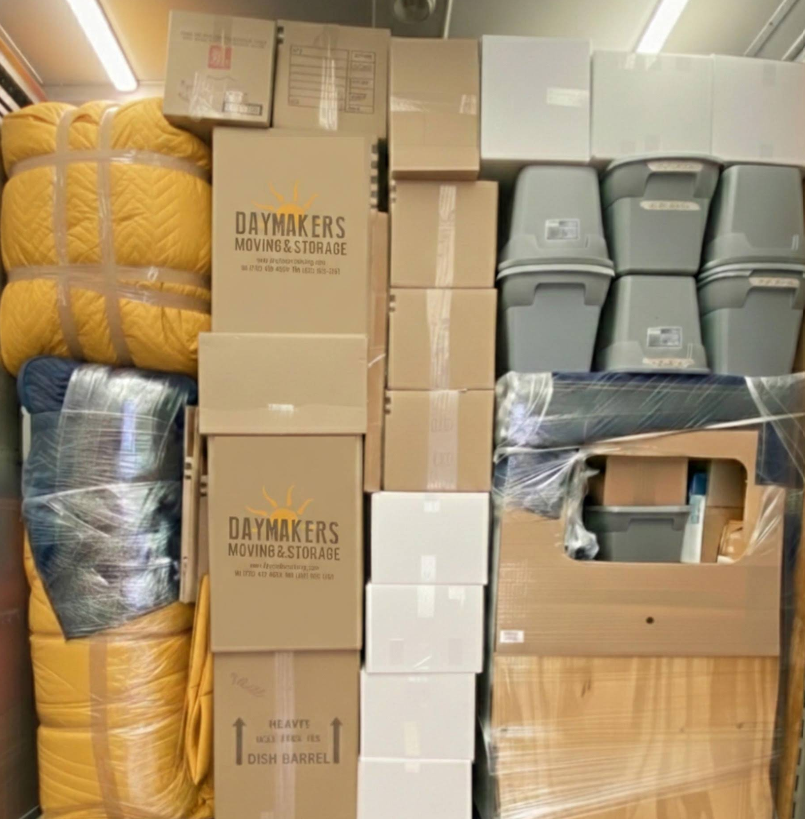
Clean it, dry it, then wrap it in cloth or paper rather than plastic. Store it where the temperature holds steady. That sequence prevents most of the damage we find when a unit gets opened months later. Moisture trapped under plastic is what breeds mildew on upholstery and lifts veneer off a dresser.
Daymakers Moving & Storage has worked as movers in Hudson, WI since 2015. We run our own facility with humidity control, dust suppression, pest management and security monitoring around the clock. Every storage job opens with the same in-person or live video walkthrough we use for a move. Walk your house once before you pack a box, and split what goes into the unit from what goes with you.
Why Hudson Weather Is Hard on Stored Belongings
St. Croix County runs humid through July and holds a hard freeze for weeks in January. Household goods in an unconditioned space ride every bit of that swing. Wood moves first. An oak table takes on moisture through a humid month and swells across the grain. It gives that moisture back when the air dries, and the joint that was tight in spring opens by autumn. Veneer lifts for the same reason, because the glue line moves at a different rate than the wood beneath it.
Fabric and paper fail a different way. Upholstery, mattresses and stored clothing hold humidity rather than shedding it. Anything sealed in plastic holds it longer still. Electronics face condensation instead, which forms when a cold device meets warmer air. Moisture, not handling, is almost always the cause when items that looked fine going in come out ruined, and it plays out the same way with how weather affects stored belongings over a long stay.
How Should You Prepare Items Before They Go Into Storage?
Preparation does more for your belongings than any other decision, including which facility you rent. Everything organic comes out. Every surface gets cleaned. Anything holding water needs to be bone dry before the door closes. A refrigerator stored with a damp seal comes out smelling like a swamp. A grill stored with grease on the grates draws pests, and that is the one problem a facility cannot fix afterward.
Work through the house in this order and the job stays manageable:
- Clean and dry every appliance. Defrost freezers, drain water lines, and prop doors open so air moves through
- Launder fabric first. Body oils and food residue draw insects and set permanently over a long storage period
- Drain fuel from anything with an engine. Mowers, trimmers and snowblowers cannot be stored or hauled with fuel in the tank
- Disassemble what comes apart. Bed frames, table legs and shelving store flat, and hardware goes in a labeled bag taped to its piece
- Photograph electronics before unplugging. Reconnecting a television months later is far easier with a picture of the back panel
- Label boxes on two sides. The side facing the aisle is the one you will actually read
What Is the Right Way to Load a Storage Unit?
Loading is where people lose space and value at the same time. Heavy boxes go on the bottom and light or fragile ones on top. Nothing rests directly on the concrete. Pallets or scrap lumber lift the load an inch or two. That keeps items clear of moisture tracking across the floor during a thaw. Upholstered furniture can stand on end where the piece allows it. That uses vertical space and keeps cushioned surfaces off the ground.
Leave yourself a path. Most households get back into the unit at least once before the period ends, usually for something they swore they would not need. A solid wall of boxes turns a five-minute errand into an afternoon. Run a narrow aisle down the center. Put whatever you are most likely to want within reach of the door. Mattresses need a cover. Lay them flat or stand them fully supported, because one leaned against a wall bends at the middle and keeps that bend.
Which Items Need Climate-Controlled Storage?
Need storage on one end of a move and not sure how many units you’ll need? Give us a call at 715-410-4054, and we’ll show you what the gap actually looks like.
How Much Storage Space Will You Need?
Sizing is the question we field most often. Guess high and you overpay, guess low and you make a second trip. Our units are 5x7x7, and unit count tracks fairly closely to bedroom count.
| Home size | Units typically needed |
|---|---|
| 2 bedrooms | 3 to 4 |
| 3 bedrooms | 6 to 8 |
| 4 bedrooms or more | 8 to 12 |
Those ranges shift with how much furniture you own and how much of the house is actually going in. A three-bedroom home storing only the basement and garage lands nowhere near six units. We scope volume directly during a walkthrough, which is the same reason we never quote a move over the phone. Sizing the unit yourself is simpler when you go room by room, and choosing the right storage unit size comes down to what is actually going in.
Check on the unit once you have loaded it. Three months in, open the door and look along the floor line and the back wall. Put a hand on a wood surface and feel whether it is cool and dry. Problems caught at three months are usually fixable, and problems found at eighteen months usually are not.
Frequently Asked Questions
No. Plastic traps moisture against the surface and holds it there, which is how mildew forms on upholstery and how finish clouds on wood. Use moving blankets, cotton sheets or paper padding instead. Those let air move through while still protecting the surface from dust and scuffs during loading.
Yes, provided it is defrosted, cleaned and fully dry, with the door left slightly open so air circulates. A sealed appliance holding any moisture develops odor and mold that is close to impossible to remove later. Drain the water line on anything with an ice maker before it is loaded.
In a climate-controlled unit, properly prepared items hold up well over multi-year periods. Preparation is the limiting factor rather than time. An item stored dirty or damp will deteriorate no matter how good the facility is. Check the unit every few months regardless of how long you expect to need it.
Not necessarily. When we handle the move into storage, our crew loads and inventories everything directly. Many customers hand us the keys after move-out and meet us at the new address weeks later. That is common when a closing date and a move-out date do not line up.
Contact Us About Storage in Hudson, WI
Tell us what needs storing and when you need it back. We will schedule an in-person or live video walkthrough to scope the unit count and the move around it.
Daymakers Moving & Storage 588 Schommer Dr., Hudson, WI 54016
Phone: 715-410-4054 (WI) | 651-955-1283 (MN)
Email: daymakersmoving@gmail.com
Hours:
- Monday to Friday 8am to 5pm
- Saturday 8am to Noon
- Sunday by appointment
Free quote: daymakersmoving.com/free-moving-quote/
Related Topics:
