

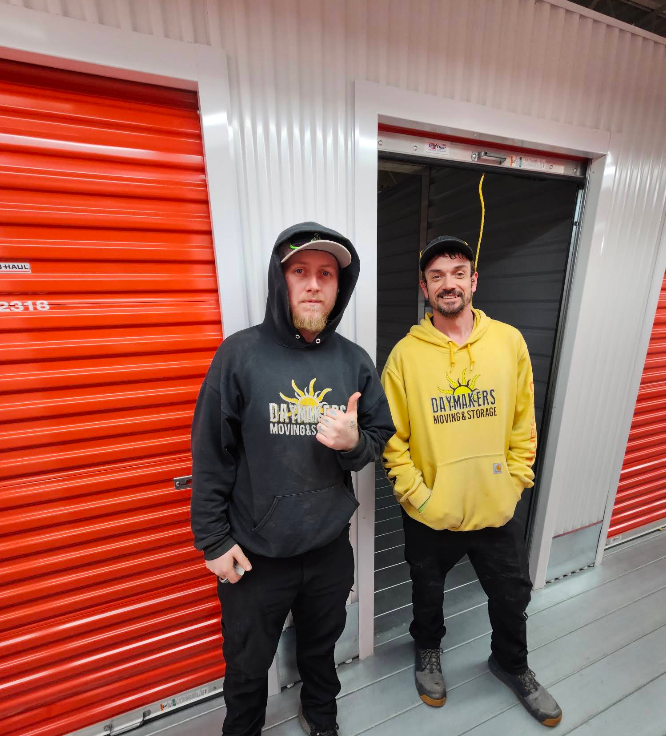
A sale closes on the twelfth and the purchase closes on the twenty-sixth. Everything you own needs somewhere to be for two weeks. That gap is the most common reason people rent storage during a move. That two-week gap is the situation a trusted Eau Claire moving company plans around most often, so storage fits the timeline without making you move everything twice.
Why Transition Storage Is Different From Long-Term Storage
Long-term storage holds things you have decided you do not need right now. Transition storage holds your entire household, briefly, in the middle of an active move. The contents are different and so is the handling, and the timeline gets measured in weeks rather than years.
That changes what matters. Access hours stop being a convenience and become a scheduling constraint, because a crew has to get in and out on a set date. Unit location matters too, because every mile between the facility and your new address adds time to the second delivery. Sorting box by box works for a seasonal unit, but it falls apart when a three-bedroom house arrives at once.
What Climate Control Actually Protects
Climate-controlled storage keeps a unit at a stable temperature and humidity level. In this part of Wisconsin that is not a luxury feature. Winter lows and summer humidity swing far enough apart to stress anything made of wood, glue, or circuitry.
Solid wood expands and contracts with moisture, and the joints show it first. Veneer lifts, piano soundboards move, and electronics collect condensation when a cold unit warms quickly in spring. None of this happens in a week. A two-month stay in a metal box on a gravel lot is long enough for the damage to start. For the specific failure points, how weather affects moving and storage conditions goes through them one at a time.
Item type | Risk without climate control |
Solid wood furniture | Joint separation and warping from moisture swings |
Upholstery and mattresses | Mildew in humid months |
Electronics | Condensation on internal components |
Photographs and documents | Curling, sticking, and fading |
Instruments | Tuning loss and structural movement |
How Storage Fits Into One Moving Plan
The real advantage of storing with your mover is that it stays one job. We load your house, hold your belongings, and deliver on the date your new place opens. You are not hiring a mover, renting a unit, then hiring a second crew to empty it.
That matters for accountability as much as logistics. One company handled the load, the storage, and the delivery, so there is no argument about where a scratch came from. Each piece enters our inventory system when it is loaded and comes out against that same list. Around-the-clock monitored security, pest management, dust suppression, and humidity control make climate-controlled storage a safe place for belongings between the load and the delivery.
Who Uses Transition Storage Most
Sellers who close early are the largest group, and the gap usually runs from a few days to a month. Second are seniors downsizing into a smaller home or a retirement community. The new space holds less than the old one, and the decisions about what goes where take longer than the move itself. Our crews work at that pace rather than rushing it.
Business customers show up here too. An office relocation often means the new suite is unfinished when the old lease ends, so furniture and equipment sit for a few weeks. We also see families moving out of state who leave before the new house is ready, which turns one relocation into two delivery dates.
Choosing a Unit Size Without Guessing
What to Pack Differently When Things Are Being Stored
Anything going into storage should be packed for three handlings rather than one. Boxes get loaded, set down, and loaded again on delivery day. Uniform box sizes survive that sequence far better than a mix of random cartons.
Label by room at the destination rather than at the origin. When the second delivery happens, the crew is placing things in a house you may not have lived in yet. Origin labels send furniture to the wrong floor. Cover mattresses and upholstery properly rather than draping them, because partial covering collects dust along every exposed edge. Wardrobe boxes are worth the cost for anything you want hanging and uncreased at the other end. Label the side of each box rather than the top, since stacked cartons hide their lids. A crew reading labels from an aisle moves faster than one lifting boxes to check.
Related Topics:
