

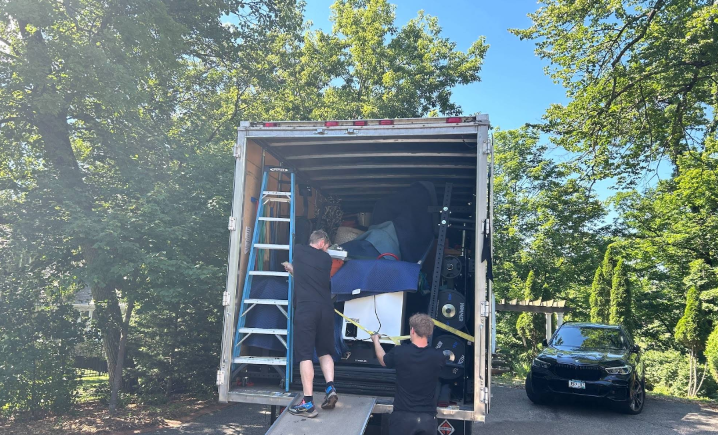
The furniture usually survives. What takes the damage is the house, and specifically the parts of it that every item in the building has to pass through. A doorframe absorbs a hundred contacts in a day. A stair rail takes the weight of a dresser going around a turn. A lawn takes a truck tire. None of that shows up on an inventory, and all of it shows up on a security deposit or a walkthrough with a buyer. Our local moving service in Hudson, WI treats building protection as part of the job rather than something crews do if there is time.
Protection also runs both directions. The house you are leaving may be under contract, and the house you are arriving at is one you now own. Damage at either end costs you. The order below follows the path an item actually takes, because that is where the risk concentrates.
The Damage That Happens Before the Truck Arrives
Plenty of move day damage is already in motion before anyone shows up. Loose handrails, a storm door with a broken closer, a cracked walkway slab, a low branch over the driveway. Each one is manageable if someone knows about it and a hazard if nobody does. Walk both properties a few days ahead and note what is already compromised, then tell the crew.
Weather in western Wisconsin adds a layer. A thaw turns a yard into something a loaded hand truck sinks into. A freeze turns a sloped driveway into a surface nobody should carry a sofa down. Salt and grit tracked in on boots will scratch a hardwood floor faster than any piece of furniture. None of this is avoidable, and all of it is plannable. Clearing and treating walkways the night before does more for floor protection than anything laid down indoors.
Entry Points, Corners and Stair Rails
The front door is where the whole move funnels, which is why door jamb protectors go on before the first box moves. They are padded sleeves that sit over the frame and take the contact that would otherwise gouge the trim. The same logic applies to the corner of the hallway everything has to turn, and to the newel post at the bottom of the stairs.
Floors get runners along the full path rather than a mat at the entry. A path means the route from each room to the door, which on a two story house is a longer run than people expect. Banisters and rails get padded when large items are coming down, since a dresser on a turn puts its full weight against a rail that was never built for it. Light fixtures low enough to be in the way come down beforehand. The post on protecting floors and doorways goes deeper on the indoor surfaces specifically.
Protecting the Outside of the House
- Park on pavement, never on the lawn or over a septic field, and confirm where the field sits before anyone backs in
- Protect the driveway edge, which cracks under a turning truck more often than the center does
- Trim or flag low branches on the approach so a box truck roof does not take them out
- Lay plywood over soft ground if a hand truck route crosses grass or mulch
- Move vehicles, bins and planters well clear of the loading zone before the crew arrives
Worried about a tricky driveway or a narrow stairwell? Give us a call at 715-410-4054, and we’ll look at the access during the walkthrough, before it becomes a move day problem.
What Changes in an Apartment or Shared Building
Shared buildings shift the risk from your property to someone else’s, and the consequences are usually financial rather than cosmetic. Most buildings require an elevator reservation, and many require masonite or similar protection down in the corridors and elevator car. Some require a certificate of insurance from the moving company before a crew is allowed in the building at all.
Ask building management three things well ahead: what the move window is, what protection they require, and what documentation they need from the mover. Those answers determine the whole shape of the day.
Common area damage in a condo or apartment typically comes out of a deposit held by the association rather than being negotiated afterward, which makes prevention cheaper than any alternative. Propping an exterior door for a crew is also worth asking about, since a propped security door is a violation in plenty of buildings.
Walkthroughs at Both Ends
A walkthrough at the start of the day and another at the end is the simplest protection there is. Before loading, walk the house with the crew lead and point out what is already damaged. Photograph anything you would not want attributed to the move. Do the same at the destination before anything comes off the truck.
The closing walkthrough is where loose ends get caught while people are still on site. Check the path, the entries, the stairs and the exterior approach. Check that protection has come up and that nothing is left behind in a closet or a crawl space.
A crew that walks you through the finished move is a crew that expects to be held to the condition of the building, which is the standard worth asking for. The way items are secured inside the truck matters here too, since a load that shifts in transit is a load that can damage the house on the way out. The post on how crews load trucks covers that side of it.
Most of this costs nothing beyond attention and a few dollars of material. The alternative is a repair bill on a house you no longer own, or a deduction from a deposit you assumed was coming back.
Planning a move with a difficult approach at either end?
Call 715-410-4054, email daymakersmoving@gmail.com, stop by 588 Schommer Dr., Hudson, WI 54016, or request a free quote, and we’ll plan the protection into the job from the start. We’re open Monday to Friday 8 am to 5 pm, Saturday 8 am to noon, and Sunday by appointment.
Related Topics:
