

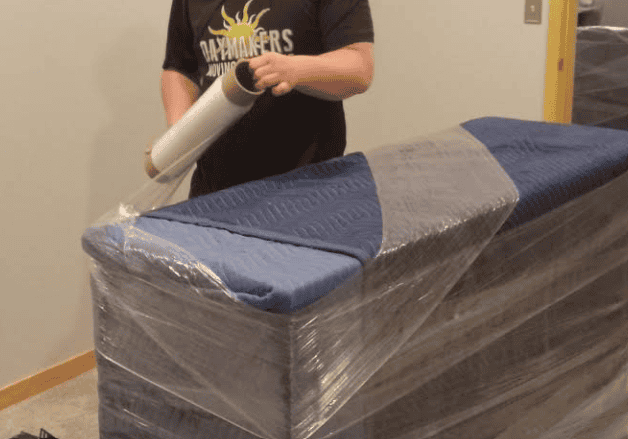
Furniture damage on a move almost never happens inside the truck. It happens in the thirty seconds a dresser spends going through a doorway unwrapped, or on a drive where nothing was strapped. The wrapping and the loading are the whole job.
We bring our own pads and stretch wrap to every move out of Roseville, Minnesota. The crew wraps each piece before it leaves the room, not at the truck. Our estimator counts what needs padding during the walkthrough. That is also the point of asking any professional movers in Roseville whether pads and wrap are included in the price.
What Furniture Padding Does and Where It Goes
Furniture pads, also called moving blankets, are thick, quilted coverings that wrap around furniture surfaces to absorb impact and prevent scratches. They are not decorative. A pad on a wood dresser is the difference between a finish that arrives intact and a scratch across the front.
We pad four categories of items as a matter of course.
Wood furniture with finished surfaces, including dressers, tables, headboards, nightstands, and bookshelves. These surfaces scratch on contact with almost anything, including the interior walls of a moving truck.
Upholstered furniture, including sofas, chairs, and ottomans. Padding protects fabric from tears and soiling during loading and unloading. In tight spaces like apartment stairwells or narrow Roseville home entryways, upholstered pieces are particularly vulnerable to catching on corners.
Mirrors and artwork. Padding wraps around the frame and face of mirrors. For framed artwork, the pad goes over the face and is secured on the back with a wrap.
Appliances. Refrigerators, washers, and dryers get padded on all sides. The control panels and finished surfaces are the most vulnerable points. Screens and other electronics are a different problem, because a pad does nothing for a panel that is not boxed first. Packing electronics safely starts with the original carton, wherever you still have it.
The number of pads a crew brings should match the volume and type of furniture being moved. We work that out during the walkthrough. The estimator goes room by room rather than asking how many bedrooms you have.
How Stretch Wrap Works Alongside Padding
Stretch wrap, the clear plastic film you have probably seen on pallets at a warehouse, plays a different role than padding.
It does not provide cushioning because its job is to hold things in place.
We use it for four jobs.
Secure furniture pads to the furniture. A pad placed on a dresser will slide off if not held. Wrap around the pad, and the piece keeps the pad in contact with the surface throughout loading and transit.
Bundle loose parts together.
Rails, shelf pins, drawer pulls, and any hardware removed during disassembly get bagged together. The bag is then taped to the piece it came off. This prevents small parts from getting separated.
Protect drawer faces. Drawers on dressers and filing cabinets are wrapped shut so they cannot slide open during transport. An open drawer catches on other items and can crack the drawer face or damage adjacent furniture.
Protect upholstery from moisture and dirt. On a rainy Roseville moving day, or a winter one with slush at the door, wrapping over upholstery keeps the fabric dry. That matters most during loading and unloading.
Why the Loading Sequence Matters as Much as the Wrap
Wrapping furniture correctly is only part of the equation. How items are loaded onto the truck affects whether that protection holds up during the drive.
Heavy items go in first against the cab wall, where dressers, appliances, and large case pieces create the base layer. Lighter items, including boxes, lamps, and loose pieces, go on top or in front.
Furniture is loaded vertically where possible. Sofas often travel on their end to take up less floor space and reduce surface contact. Mattresses stand upright against the wall with a barrier between them and other items.
Soft goods, including bagged clothing, pillows, and cushions, fill gaps between hard furniture pieces. This prevents shifting during the drive without adding weight.
Straps and load bars secure the load, so a well-packed truck barely moves when it stops or turns. Shifting is the primary cause of damage during transit, and proper loading eliminates most of it.
One Roseville area customer summed up the result this way: “All items were well-wrapped, cushioned, and secure during transit.” Shelli M., Google review.
Want to know how many pads a job like yours actually takes? That number comes out of the walkthrough rather than a phone call, and it goes on the written estimate with everything else.
What a Minnesota Winter Adds to the Process
Roseville moves between November and March, adding variables that affect how furniture is wrapped and handled. We plan for those conditions on every winter move rather than reacting to them on the day.
Cold air stiffens plastic film, so stretch wrap applied at twenty degrees needs more tension than the same wrap in July. Our crews adjust rather than working to one habit all year.
Snow, ice, and slush at the doorway turn into a floor protection problem. We put runners down at both the origin and the destination, because hardwood and carpet should not take tracked-in moisture and grit all day.
Moving a piece from a warm house into cold air and back can leave condensation on some surfaces. Wood and electronics are the most sensitive to it, and keeping pads on through the full loading sequence limits that exposure. How weather affects moving and storage goes further into what cold, heat, and humidity do to belongings once they are sitting in a warehouse.
What to Look for When Hiring Movers in Roseville
Not every moving company brings the same materials or applies them with the same care. Four questions sort out the difference quickly, and they are worth asking before you book rather than after.
- Do you bring your own furniture pads, or am I expected to supply them?
- How many pads come on a job this size, and is that number based on my inventory?
- Do you wrap furniture in the house, or at the truck?
- Will you walk me through what was protected before the crew leaves?
The answers that matter are specific ones. A company that supplies the materials, scales the pad count to your inventory, and wraps in the room is describing a process. One that answers in round numbers is quoting a price.
Our professional packing services cover all of it. That means furniture pads, stretch wrap, materials for fragile items, and a crew that wraps before anything leaves the room.
Frequently Asked Questions
Do movers bring their own furniture pads?
Does stretch wrap scratch furniture?
Should furniture be wrapped in the house or at the truck?
How is a winter move in Roseville different?
What should I do before the crew arrives?
Booking a move in Roseville, MN? Call our Minnesota office at (651) 955-1283 or request a free moving quote on our site. We will walk the rooms with you and count the pieces that need padding. All of it goes into a written estimate before you commit to a date.
Related Topics:
