

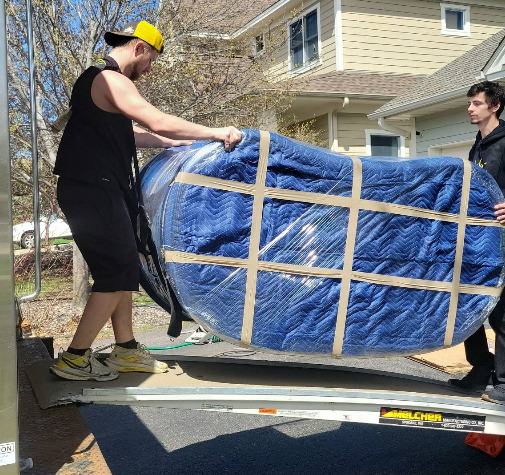
Crews load a truck in tiers, heaviest at the floor and lightest at the top. Each tier gets strapped to the wall before the next one starts. Padding and wrapping happen inside the house rather than at the ramp, which is how a reliable moving company keeps furniture protected before the truck even moves. Most damage happens while items are in motion on the road. A properly loaded truck has almost no empty space in it, and that density is deliberate.
Why Loading Order Decides the Outcome
Weight placement controls how the truck behaves. Heavy items go against the front wall near the cab, which keeps the load from shifting rearward under braking. Appliances, safes, and case goods establish the base, and everything lighter builds upward and backward from there.
The second reason for order is the unload. A crew loading a multi-room house puts the last rooms in last. The first things off the truck are the first things needed in the new house. Reversing that costs an hour of shuffling in a driveway. Getting it right means the unload follows the sequence you actually want rooms set up in.
How Furniture Gets Protected Before It Moves
Padding happens in the room, not at the truck. Moving blankets go on upholstery, wood surfaces, and anything with a finish, held by stretch wrap rather than tape against the surface. Tape on a finish lifts it, which is why wrap goes over the pad instead of onto wood.
Different materials need different treatment, and the crew sorts that as they go:
- Upholstery: full blanket wrap, then stretch film to keep fabric sealed from dust
- Wood furniture: padded at corners and edges first, where impact lands
- Glass and mirrors: cardboard-faced, then crated or set in dedicated slots
- Appliances: secured doors, padded sides, moved upright on equipment
- Mattresses: covered rather than draped, since open edges collect everything
The house gets protected too. Floor runners, door jamb pads, and banister covers go in before the first item moves. Walls and casings take as much damage as the furniture does.
What Happens in Transit That Nobody Sees
A truck at highway speed transmits constant vibration into everything on it. Over a short local run that barely registers, but over several hundred miles it works items loose. A load that looked solid in the driveway can arrive shifted.
Straps are the answer, applied in tiers rather than once at the end. Each section gets secured to the wall rails before the next goes in, so the load locks in segments. Density does the rest, because items that cannot move cannot collide, and crews fill gaps with padding rather than leaving furniture room to travel. Crating gets added by dependable long-distance movers whenever a route keeps belongings on the truck for days.
Why One Truck and One Crew Changes the Risk
Every transfer between vehicles restarts the protection process with people who did not do the original wrapping. Load transfers are a common industry practice and a significant source of damage and loss. Nobody from the origin is present at that handover.
We do not transfer local loads. Inside a 100-mile radius your belongings stay on one Daymakers truck with one background-checked crew. The crew that padded your dresser carries it up the stairs at the other end, and they know what is behind the blanket. One customer described the result this way. “A cross-country move isn’t easy, but the crew at Daymakers did an excellent job of communicating expectations while delivering friendly, quality service.” K.T., Google Review
How Access at Each End Changes the Load Plan
Where Specialty Items Sit on the Truck
Pianos, safes, and pool tables get placed first and secured independently of the surrounding load. Their weight means they cannot ride against lighter items, and their value means nothing gets stacked on them. Each one straps directly to the wall rails rather than relying on whatever sits alongside.
Oversized furniture follows similar rules, with disassembled sections kept together and hardware bagged to the piece it belongs to. The same principles behind moving large furniture and specialty items safely apply to local work in Eau Claire, WI and to interstate routes alike.
Frequently Asked Questions
Does the crew wrap furniture at the house or at the truck?
How do you keep boxes from crushing during transit?
Will my belongings be moved to another truck along the way?
What should I do before the crew arrives to help the load go well?
Contact Us
Ask us how your load would be planned before you book anything. Call our Eau Claire office at (715) 500-6172 to talk it through. You can also come by 6445 Scully Dr Suite 4, Eau Claire, WI 54701 and see the equipment we use. We are open Monday through Friday from 8 am to 5 pm, Saturday from 8 am to noon, and Sunday by appointment. Our free quote form will get the walkthrough on the calendar.
Related Topics:
