

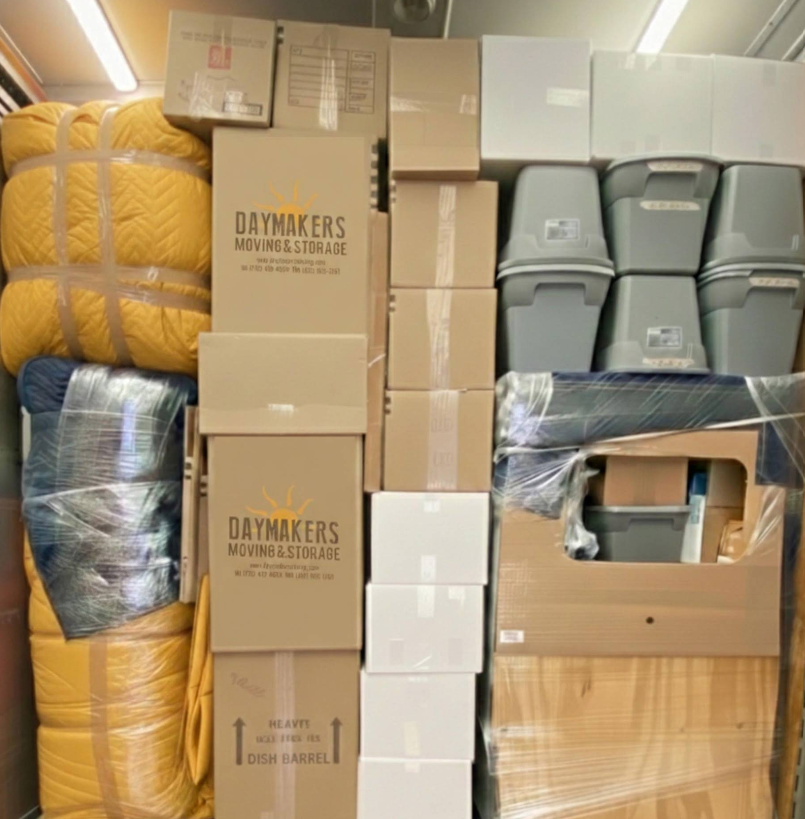
A labeling system is working when a crew member picks up a box, reads it, and walks straight to the right room without asking anyone. That is the whole test. Everything else, the colors, the numbers, the tape, exists to make that moment happen reliably across two hundred boxes and a nine-hour day. Our crews unload for households across Altoona and Chippewa Falls as well as the city itself, and the difference between a labeled move and an unlabeled one shows up in the clock. Boxes stacked in a hallway because nobody could tell where they belonged become your problem for the next three weekends, not ours, which is why our moving services for Eau Claire homes start the conversation about labeling at the walkthrough.
The system below takes about ten extra minutes per room to set up and pays most of that back on the first afternoon in the new house.
Marking the Room on Every Visible Side
Write the destination room on all four sides of the box and on the top. A single marking on one face is a coin flip, because the box gets stacked by whichever side happens to be out, and a crew carrying a box up a flight of stairs is not rotating it to hunt for a label.
Use the room name at the destination rather than the room it came from. A box packed in the spare bedroom that is headed for a home office should read OFFICE, not SPARE ROOM. Crews follow what is written, and a mislabeled box lands exactly where the label says it should. Thick marker in dark ink beats a ballpoint, and a label on bare cardboard beats one written across packing tape, which smudges and peels.
Adding a Color That Works From Across the Room
Color is faster than reading, and speed matters when a crew is moving at pace. Assign each room a colored tape or a sticker and put a strip on two adjacent sides plus the top. A mover glancing at a truck wall full of boxes sorts them by color in a second and by text in five.
Post a matching sheet of colored paper on each doorframe at the new house before the truck arrives. That single step turns the crew into a self-directing operation, since nobody needs to ask where the blue boxes go.
Room | Suggested color | Why it helps |
|---|---|---|
Kitchen | Red | High box count, unpacked first, needs priority placement |
Primary bedroom | Blue | Beds get assembled early, so these land early |
Kids’ rooms | Green and yellow | One color per child keeps sets separate |
Living room | Orange | Bulky and low urgency, stacks toward the back |
Office and basement | Black or grey | Lowest unpack priority, placed last |
Numbering Boxes and Keeping an Inventory
Want the labeling handled as part of the job? Give us a call at (715) 500-6172, and we’ll set a flat rate after a free walkthrough, with our packing crews labeling by room and number as they go.
Flagging Fragile, Heavy, and Open-First Boxes
Three markings need to stand apart from the room system, because they change how a box is handled rather than where it goes. FRAGILE goes on all sides with an arrow showing which way is up. HEAVY goes on anything over about 40 pounds, which lets a crew member set up properly rather than meeting the weight mid-lift. OPEN FIRST goes on the handful of boxes holding what you need on night one.
Keep OPEN FIRST genuinely small, four or five boxes across the whole house. Bedding, towels, a kettle and mugs, basic tools, toilet paper, phone chargers, and whatever the kitchen needs for one simple meal. The temptation is to mark fifteen boxes that way, which defeats the purpose and leaves you opening everything anyway. Those boxes load last and come off first, and telling the crew which ones they are at the start of the day means they come off the truck in the right order rather than being dug out at nine at night.
Letting the Crew Know the System Exists
Spend two minutes on it when the crew arrives. Show them the color key, point out the doorframe markers at the destination, and name the OPEN FIRST boxes. A system nobody explains is a system that partly works, and this is the cheapest two minutes in the entire move.
Mixed moves need one extra note. Households that pack some rooms themselves and hand the rest to a crew end up with two labeling conventions on the same truck unless somebody aligns them. Tell the crew what you have been using and they will match it rather than defaulting to their own, which keeps the unload coherent. The division of labor between what you pack and what a crew packs is covered in our explanation of what movers pack versus transport, and deciding that early is what keeps the labeling consistent throughout. Whatever split you choose, the system only has to be legible, not elegant.
Moving within the Chippewa Valley and want the whole job handled, packing and labeling included?
Call our Eau Claire office at (715) 500-6172, stop by 6445 Scully Dr Suite 4, Eau Claire, WI 54701, or contact us for a free moving quote, and start with a free walkthrough. We’re open Monday through Friday 8 am to 5 pm, Saturday 8 am to noon, and Sunday by appointment.
Related Topics:
