

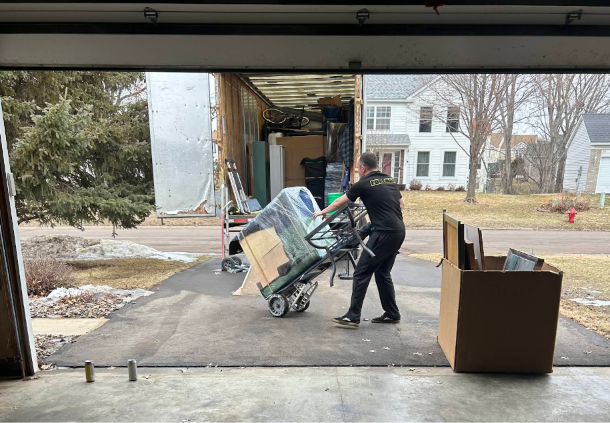
Every major appliance in your house holds water somewhere, and in a Minnesota winter that water is the whole problem. A washer drain pump, a dishwasher sump, an ice maker line, and a refrigerator drain pan each hold enough to freeze, expand, and crack a fitting while a truck sits in traffic at twenty degrees. Draining them the day before is the fix, and we cover it with every household booking residential moving crews in Roseville between November and March.
Appliance prep sits between your responsibility and ours, so settle it early. We do not perform gas disconnections or hard-plumbed water line work, which needs a licensed trade. We handle the move, the padding, the stair work, and the placement. The walkthrough confirms which appliances are coming and who disconnects them.
Why Appliance Prep Changes Once Temperatures Drop
Residual water is harmless in July and a liability in January. A quarter cup trapped in a drain pump expands as it freezes, and the plastic housing has very little give. The failures we see are rarely dramatic on moving day, because the damage shows the first time the unit runs at the new house.
Cold also changes how the materials behave. Rubber door gaskets stiffen and tear when a door swings open on a stair. Plastic trim and control panels turn brittle enough that a knock that would scuff in summer can crack. Our crews pad appliances fully and move them upright on straps.
Preparing the Refrigerator and Freezer
Start emptying two or three days out so you are not throwing away a full freezer. Unplug the unit twenty-four hours before the move, prop both doors open, and let it defrost completely over towels. A freezer still shedding water on the truck drips through the load and leaves moisture in the cabinet.
The water line is the part people forget. Shut off the supply valve, disconnect the line, and drain it with the ice maker reservoir. Empty and dry the ice bin, pull the drain pan if your model has one, and wipe out the interior. Tape the doors closed, and let the unit stand upright several hours at the new house before plugging it in.
Draining the Washer, Dishwasher and Water Lines
- Shut off hot and cold supply valves behind the washer, disconnect both hoses, and drain them into a bucket.
- Run a short spin cycle with the supply off to clear the drum and push water out through the pump.
- Pull the washer drain filter at the base, drain it over a shallow pan, and leave the door ajar overnight.
- Disconnect the dishwasher supply line and sponge out the sump where water pools.
- Install the shipping bolts if you still have them, since they lock the drum and prevent suspension damage.
Not sure whether your appliances need a plumber before moving day? Give us a call at (651) 955-1283, and we’ll sort out the sequence at the walkthrough so nothing holds up your date.
Gas Appliances, Dryers and Ranges
Gas lines are not a do-it-yourself item and not something our crews touch. A licensed plumber or your utility handles the disconnect on a gas range, dryer, or water heater, and that appointment needs booking well ahead, since availability tightens in December. Capping the line properly is what matters, and documentation helps the next owner or your landlord.
Electric dryers are simpler but still need preparation. Disconnect the power, clean the vent duct, and tape the cord to the back rather than letting it swing. Clear the lint trap and the housing behind it, since lint holds moisture and a damp pack of it in a cold truck causes trouble. Tape the door shut for the ride.
What Happens to Appliances Headed Into Storage
Storage raises the stakes on every step above. An appliance stored with water still in it has weeks or months to develop corrosion, mildew, or a frozen fitting rather than a few hours. Everything gets drained, dried, and left with doors slightly open so air moves through.
Humidity control separates a safe storage run from a risky one. Our facility monitors humidity around the clock and holds it between 35 and 55 percent, protecting seals, electronics, and metal from both damp and extreme dryness. If your appliances are going into a gap between closings, what applies to climate-controlled storage in Roseville applies to everything stored alongside them.
Frequently Asked Questions
These come up most often once a winter move-out date is set.
We handle the physical move, padding, and placement. We do not perform gas disconnections or hard-plumbed water line work, which requires a licensed trade. Simple hose disconnects are usually something households manage themselves.
At least twenty-four hours, longer with heavy ice buildup. The unit needs to defrost fully and dry before it goes on the truck; otherwise meltwater travels with it and refreezes inside.
Yes. Water left in the pump, hoses, or drain filter expands as it freezes and can crack the housing. The failure usually shows the first time you run a load at the new house.
If you still have them, use them. They lock the drum so the suspension does not absorb road vibration. Without them, we strap and pad the unit carefully, but the bolts are better protection.
Only if completely drained and dry, with doors slightly open. Sealing a damp appliance into storage invites mildew and corrosion, so we build drying time into the schedule.
Contact Us
Appliance prep is easier to plan than to improvise, especially with a December date.
Call our Roseville office at (651) 955-1283 or email Daymakersmoving@gmail.com to book a walkthrough, and we will sort out what you handle and what we take care of.
We are open Monday through Friday from 8 am to 5 pm, Saturday from 8 am to noon, and Sunday by appointment.
Related Topics:
