

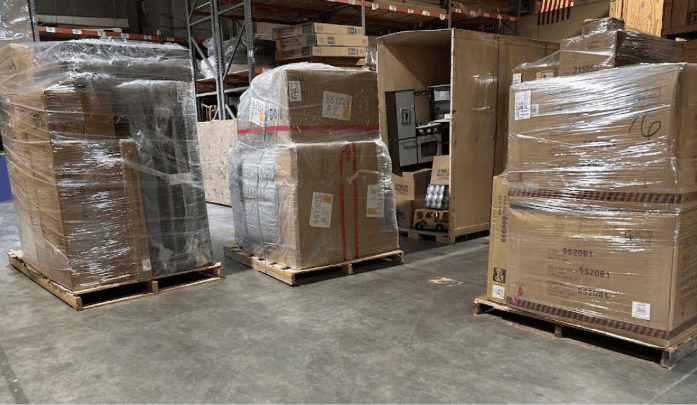
Technology moves on a separate track from furniture. Workstations are photographed and labeled before anything is unplugged, servers and network gear are packed individually rather than boxed with accessories, and the whole category is staged so it arrives first and gets reconnected before desks are even in position. Furniture can wait an hour. A business that cannot get online cannot.
We are Daymakers Moving & Storage, and our commercial moving crews in Lake Elmo handle office relocations across Washington County where the real deadline is not the truck; it is Monday morning.
Why Technology Gets Handled Separately
A damaged desk is an inconvenience that gets replaced from a catalog. A damaged server, a lost drive, or a workstation that will not boot is a different category of problem, because the hardware is replaceable and the business continuity around it is not.
Risk concentrates in a small number of items. The network rack, the server or NAS, anything holding records, and the handful of machines that specific people cannot work without. Those pieces represent a small fraction of the truck volume and most of the exposure, which is why they get their own handling plan rather than being treated as part of the general office load.
Sequencing follows from that. Technology is loaded in a way that lets it come off first at the destination, so an IT provider can begin reconnecting while the crew is still bringing in desks. Reversing that order means the reconnection work starts at the end of the day rather than the start, and that is how a one-day move turns into two.
Preparing Workstations Before the Move
Documentation happens before a single cable is pulled. Each workstation gets photographed from the back, and cables are labeled at both ends, because reconnecting forty machines from memory is a slow and error-prone way to spend a Sunday.
Machines are then separated into their components. Monitors are wrapped individually, towers are boxed with internal padding, and peripherals are grouped by desk rather than by item type. Grouping by desk is the detail that matters. A box of forty keyboards is useless on reconnection day. A box labeled with a department and a desk number lands exactly where it belongs.
Data backup sits with the client rather than the mover. Back up critical systems separately from the move, before the move, and verify the backup. No amount of careful packing substitutes for a current copy of anything the business cannot operate without.
What the Crew Does With Servers and Network Gear
Rack equipment comes out with hardware kept together and the rack itself handled as a unit where it can be. These pieces are heavier and more awkward than they look, and the mounting hardware disappearing between buildings is a common and entirely avoidable delay.
Packing for this category runs tighter than for general office contents:
- Each server or network device packed on its own with internal cushioning, never loose in a shared carton
- Rack screws, rails, and mounting hardware bagged and labeled with the unit they came from
- Cable runs labeled at both ends and coiled by rack position rather than thrown in a bin
- Patch panel and switch port assignments documented before anything is disconnected
- Anything static-sensitive wrapped appropriately rather than in standard plastic
Coordination with your IT provider makes the difference here. Decide early who is physically disconnecting and reconnecting the gear, because a moving crew carrying equipment is a different arrangement from an IT team decommissioning a rack. That boundary should be settled at the walkthrough, not discovered on the day. Our approach to how office and warehouse relocations get staged covers where those handoffs usually sit.
Relocating a Lake Elmo office with technology on the critical path?
Give us a call at (651) 955-1283, and we’ll book a walkthrough, and build the plan around your reconnection schedule.
Files, Records and Equipment in Transit
Paper records travel in sealed, labeled cartons tracked by department and destination. For regulated records, confirm your own chain of custody requirements before the move and tell us at the walkthrough so the handling matches them.
Where equipment or files need to sit between addresses, which happens whenever a lease gap opens or a buildout runs long, our facility in Hudson, WI holds humidity between 35 and 55 percent with pest management and dust suppression. That matters more for electronics and paper than most people expect. Humidity swings corrode connectors and warp document boxes, and a standard locked unit does nothing about either.
Multi-address jobs are routine rather than special. Where a relocation involves a temporary space, a storage drop, or equipment going to two different sites, sequencing a day with several addresses is planned before anything is loaded so the order of operations holds.
Reconnection and the First Day Back
Technology is placed according to the new floor plan rather than dropped in a staging area, which means the floor plan needs to exist before moving day. A simple sketch showing desk positions and which workstation belongs where is enough, and it saves an enormous amount of standing around.
Reconnection runs faster when the labeling held. Cables are matched back using the photographs, machines are returned to their numbered desks, and the network gear is reinstalled in the order it came out. A single point of contact from your side, available by phone during the move, resolves the inevitable questions about where something goes without anyone guessing.
Build in a buffer before the first full working day. Even a clean relocation produces a handful of small problems, and finding them on a quiet afternoon is far better than finding them when thirty people arrive expecting to work.
Planning a commercial move around your downtime window?
Call (651) 955-1283, email daymakersmoving@gmail.com, stop by 8530 Eagle Point Blvd Suite 100 #132, Lake Elmo, MN 55042, or contact us for a free moving quote, and tell us your hours. We’ll scope the job to fit them rather than the other way around. We’re open Monday to Friday 8 am to 5 pm, Saturday 8 am to noon, and Sunday by appointment.
Related Topics:
