

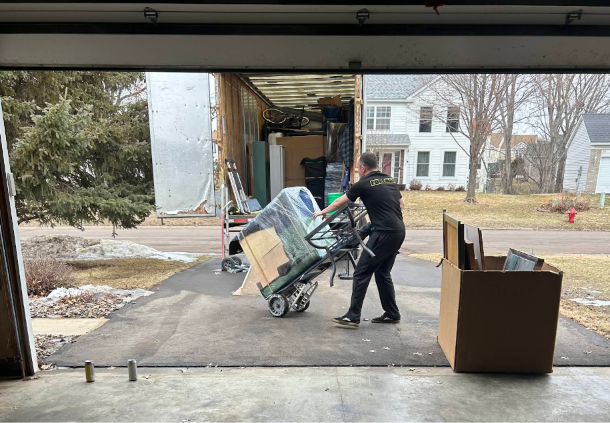
Most broken dishes do not break from impact. They break because the box had room to move, and six hours of road vibration between Eau Claire and a new address is enough to turn a half-inch of slack into a cracked rim. Packing fragile items well comes down to eliminating movement inside the carton and choosing a carton the right size in the first place. Our crews at Daymakers Moving & Storage see the results of both approaches, and the residential moving team in Eau Claire can tell within a few boxes whether a household packed with a method or packed in a hurry.
This guide covers the categories that cause the most damage, in the order most households meet them. Everything here assumes you are packing yourself, which plenty of people prefer for sentimental items even when a crew handles the rest.
Getting the Materials Right Before You Start
Dish barrels, sometimes called dish packs, are double-walled cartons built for kitchenware, and they are worth the cost for the one or two boxes that hold your breakables. A standard book box will hold the same dishes but offers roughly half the crush resistance, which matters when it sits third in a stack.
Packing paper beats newspaper every time. Newsprint transfers ink onto porcelain and fine china, and removing it afterward is its own afternoon. Buy more paper than seems reasonable, because proper wrapping uses two or three sheets per item rather than one. Bubble wrap earns its place for electronics, framed art, and anything with a protruding element. Our full rundown of packing supplies by home size covers quantities room by room, which saves a second trip mid-afternoon.
Packing the Kitchen Without Losing a Set
Plates travel on edge, never stacked flat. Stacked plates concentrate the weight of the whole pile onto the bottom piece, and that is the one that cracks. Wrap each plate individually, then stand them vertically in the box like records in a crate, with crumpled paper filling the gaps at either end.
Glassware and stemware need paper inside the bowl as well as around the outside, and cell dividers turn a dish barrel into the right container for them. Work heaviest to lightest from the bottom up, and keep each box under about 50 pounds so nobody is wrestling it. The test is simple: close the box, lift it, and tilt it gently. If anything shifts or clinks, open it and add paper. A box that does not move internally will survive almost anything a truck can do to it.
- Plates and platters: wrapped individually, standing on edge, paper packed around both ends
- Stemware: paper inside the bowl, wrapped outside, upright in cell dividers
- Bowls: nested no more than three deep with paper between each
- Cast iron and heavy pots: bottom layer only, never above fragile pieces
- Small appliances: original boxes when you still have them, otherwise wrapped and braced on all six sides
Mirrors, Artwork, and Anything Framed
Packing the house yourself and running out of weekend? Give us a call at (715) 500-6172, and we’ll scope the kitchen or the whole home at a free walkthrough and set a flat rate.
Electronics, Lamps, and the Awkward Category
Photograph the back of anything with more than two cables before unplugging it. That photo is worth an hour at the other end. Original boxes are ideal when you still have them, since the moulded inserts hold components exactly where the manufacturer intended.
Televisions need a flat carton or a dedicated TV box and travel upright, never laid face down. Lamps come apart: shade off, harp off, bulb out, base wrapped and boxed separately with the shade in its own carton stuffed lightly with paper rather than crushed. Anything with an internal drive or a fan deserves a note about temperature, which matters in a Wisconsin winter when a loaded truck sits cold overnight. Condensation forms when a cold device meets a warm room, so let electronics reach room temperature before powering them on at the destination.
Labelling So the Crew Protects the Right Boxes
A box marked FRAGILE on one side gets stacked by whichever side happens to face out. Mark all four sides and the top, and add an arrow showing which way is up. Crews load to what they can read, and a box that reads clearly from any angle gets handled correctly without anyone having to ask.
Write the destination room beside the fragile mark. A crew that knows a box is both fragile and headed for the dining room places it accordingly, usually near the top of a tier and off the floor of the truck. Keep a short list of which numbered boxes hold what, because the unpack goes faster and insurance conversations get simpler if anything goes wrong. Households weighing whether to hand this off entirely will find the honest version in our look at whether packing services are worth it, which is a fair question when the alternative is three weekends of wrapping.
Fragile pieces you would rather not pack yourself, from stemware to framed art?
Call our Eau Claire office at (715) 500-6172, stop by 6445 Scully Dr Suite 4, Eau Claire, WI 54701, or contact us for a free moving quote, and tell us what you have. We’ll scope it at the walkthrough. We’re open Monday through Friday 8 am to 5 pm, Saturday 8 am to noon, and Sunday by appointment.
Related Topics:
