

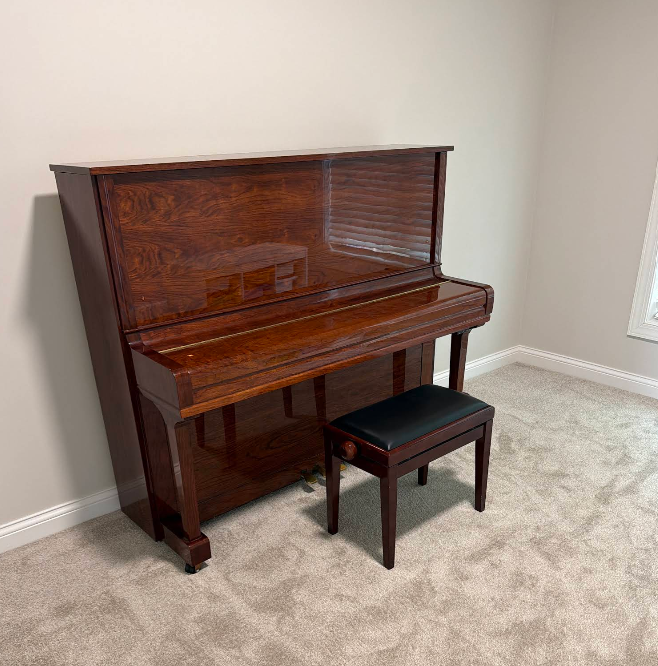
An upright piano weighs more than most sofas and concentrates that weight across four small points, which is why specialty items get their own plan and their own equipment. Crews that are trained and background checked handle these pieces as part of moving services, with the planning starting at the walkthrough rather than on the driveway. Measuring the stairwell in advance prevents the conversation nobody wants to have at the landing.
What Makes an Item a Specialty Move
Weight alone does not define a specialty item. A piece qualifies when its weight, shape, fragility or value puts it at risk under standard handling. Pianos, gun safes and heavy floor safes fall in because of mass and balance. Large mirrors, stone topped tables and oversized framed art fall in because of fragility. Several of those are light enough for two people to lift.
The practical difference shows up in the plan rather than the effort. A standard item gets wrapped, carried and loaded in sequence with the rest of the room. A specialty item gets a measured route and a decision about disassembly. It also gets dedicated equipment and a slot in the load where nothing stacks against it. Those decisions happen before the truck arrives.
How We Move a Piano Without Damaging It or the Home
Upright and grand pianos take different approaches, and the difference is structural. An upright travels on a piano board, strapped upright with the keyboard protected. Casters come off or get locked. A grand comes apart in a specific order: the lid, the music desk, then the legs and pedal lyre. The body is lowered onto a padded skid board and secured on its straight side.
The route matters as much as the lift. Doorway widths, stair turns and landing depth all get measured first. A grand on a skid board has a fixed footprint that will not negotiate a tight corner. Floors along the path get runners and the door jambs get padded. Risk to the home during a piano move usually runs higher than risk to the instrument. The boards, straps and ramps that make this routine rather than improvised come standard with specialized piano moving crews.
Tuning is the question we hear most often. Any piano should be tuned after a move, and the honest advice is to wait. The instrument needs time to settle into the humidity and temperature of its new room. Scheduling a tuner a few weeks out gives better results than booking for the next day.
Safes, Art and Other Items That Need a Different Plan
Heavy safes present the opposite problem to a piano. The weight is compact rather than spread out. Floor loading and stair strength become real considerations rather than theoretical ones. Crews use stair climbing equipment and a controlled descent rather than a straight carry. The route is often decided by what the stairs can take instead of what the doorway allows.
Art, antiques and collectibles sit at the other end of the scale. These need custom crating or double boxing, plus corner protection. They also need a loading position where nothing can shift against them in transit. Declaring high value pieces in writing before the move matters too, since coverage terms treat them differently from ordinary household goods. The handling principles behind fragile and high value items apply across all of these categories.
Have a piano, safe or oversized piece you’re worried about?
Give us a call at (651) 955-1283, and we’ll measure the route and confirm the equipment before anything is booked.
What to Tell Us About a Specialty Item Before Moving Day
A few details sharply change how a crew prepares, and they are easy to gather in advance. Knowing whether a piano is an upright, a console or a grand determines which board comes on the truck. The make and approximate age help too, since older instruments often need gentler handling at the casters and pedals.
For safes, the two useful numbers are approximate weight and whether the unit is bolted down. Anything anchored to a floor or wall needs to be released before moving day, and that is usually the owner’s task rather than ours. Photographs of the item and the path to the nearest exterior door tell us more than a description can. Sending those ahead of the walkthrough often shortens the visit considerably.
Add Your Why the Walkthrough Decides Everything on a Specialty Move Text Here
A phone call cannot tell us whether a grand piano will clear the turn at the bottom of your stairs. The walkthrough is where crew size, equipment list and time allowance get set. It can happen in person or over live video. Skipping it is how a crew arrives without the right board, which turns a planned job into a rescheduled one.
The measurements we take also shape the inventory and the load order. Specialty items are rarely loaded first or last by accident. The position is chosen so nothing stacks against a padded surface or shifts into a corner in transit. How a truck is loaded is part of the same plan rather than a separate concern.
Specialty items in Roseville, MN also tend to live in homes that complicate the route. Split levels put a landing turn between the main floor and the garage, and older stairwells narrow at the top. Walking it in advance is the only reliable way to know.
Have a piano, safe or oversized piece moving this season?
Call our Roseville office at (651) 955-1283 or email Daymakersmoving@gmail.com to start with a walkthrough, and we’ll give you a written number that already accounts for the route and the equipment.
Related Topics:
